Past projects - Site investigations


The
Hillside Site


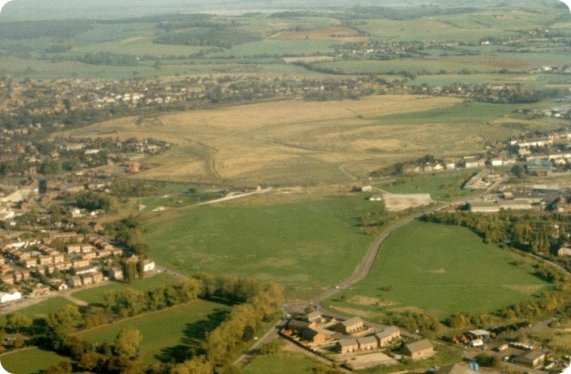
Arial view of the Swadlincote site

The Hillside site is in Swadlincote, South Derbyshire.  Historically, the land had been subject to both deep mining and the opencast abstraction of coal and fire clay.  

In the 1970's, the site was subject to further opencast excavations, to a depth of over 30m and the restoration of the land was carried out with a 'non engineered' fill.  Essentially this means that the soil was tipped in the hole with no attempt being made at controlled compaction.  In addition to this, part of the opencast void had been used as a landfill site which was known to be generating methane and carbon dioxide gases.

Our client wanted to develop the site for a variety of residential and commercial uses, with part of the site being donated to help create the Swadlincote Woodlands Project.

Our initial desk study confirmed that around half of the site had been subject to opencast coal excavation in the 1970's.  These excavations had rationalised the historic workings on the land and so it was the more recent workings which presented the most significant risk to future development.  That and the additional complication of the site having large thicknesses of fill in parts and natural ground in other parts.


ksa consulting engineers
consulting   civil  and  structural   engineers

Client:         Gresley investments Ltd
Location:     Derbyshire
Value:          £1m


Whilst there were a number of potential solutions to the problem of ground stability, the cost of these solutions was crucial to the development plans for the site.  Even though the land had been left for over 20 years since the opencast workings were completed, this in itself would not ensure the future stability of the fill material.

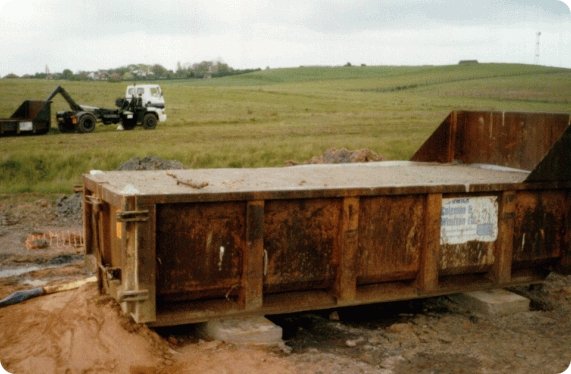
The investigations which were carried out, comprised light cable percussion boreholes, together with open hole rotary probing at depth, trial holes, skip loading and inundation tests, laboratory testing of potential contaminants and landfill gas monitoring.

Skip loading tests

The results of all these investigations were summarised in a comprehensive report on the proposed development site.  The report concluded that development of the site was possible and that economic semi rigid reinforced concrete raft foundations could be used.  The proposed development was granted planning permission in 1996.

We then completed the detailed drainage design for the development, incorporating on site balancing, and we supervised the construction of the main highway and drainage work to facilitate the overall development.

Since our site investigation was carried out, over 350 new houses have been constructed on the site with simple reinforced concrete raft foundations.  The additional foundation costs were minimal compared to a green field site.